According to the NIH more than 5.3 million adolescents ages 12-17 years old (20.3%) of adolescents) had a diagnosed mental or behavioral health condition in 2023. These conditions range from anxiety, depression or behavioral/conduct problems. Anxiety is currently the most common mental health condition among youth followed by depression. Below you will find the most common mental health diagnosis among youth defined with links to evidence based resources and support. While contributing factors to a mental health diagnosis can vary, links to resources for specific scenarios (example: divorce/adoption/bullying) are also listed below.

Please note: a mental health diagnosis can only be made by a qualified healthcare professional.
Anxiety
The American Academy of Pediatrics (AAP) defines anxiety as a normal human emotion of feeling worried or scared. Anxiety acts as a natural “fight or flight” response to stress, danger, or new challenges such as taking a test or talking in front of a large group. Those feeling typically subside once the event is over however Anxiety Disorders occur when fears and worries become extreme, persistent (often lasting 4-6 weeks), and interfere with daily functioning such as school, sleep, or play.
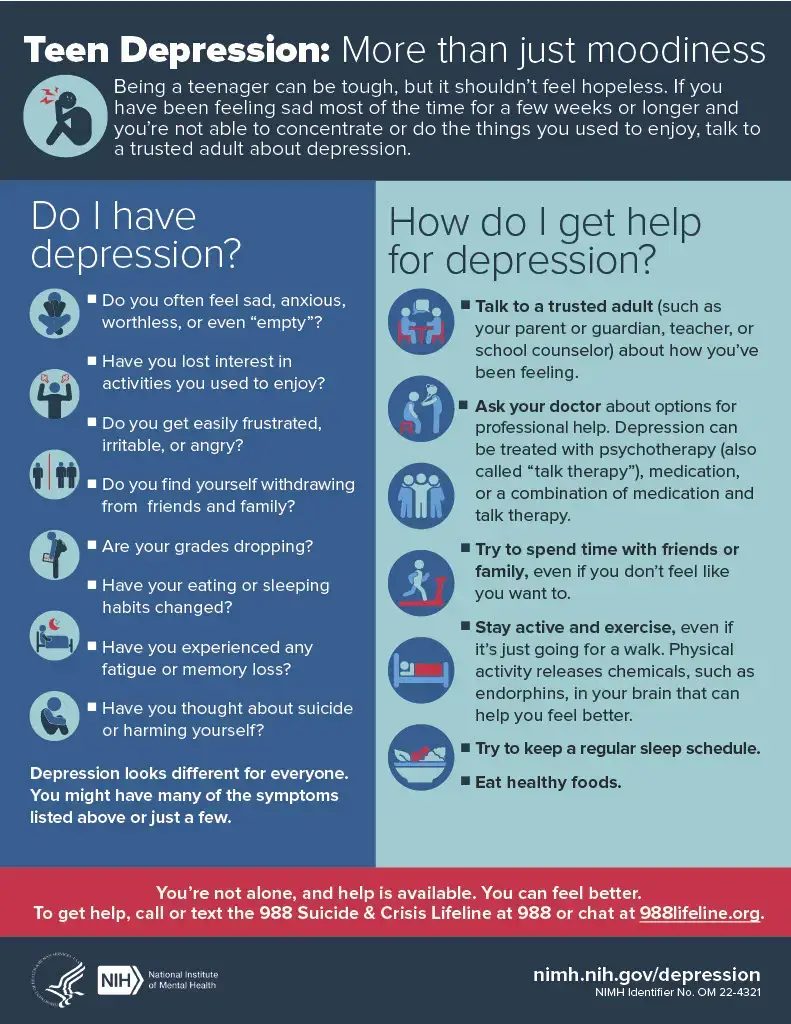
Teen Depression
Teen depression is defined by The Mayo Clinic as a serious mental health problem that causes a persistent feeling of sadness and loss of interest in activities. It affects how your teenager thinks, feels and behaves, and it can cause emotional, functional and physical problems. Although depression can occur at any time in life, symptoms may be different between teens and adults. Some common signs of depression in teens include (but not limited to): persistent sadness or irritability, withdrawn from social activities, decline in typical academic performance, changes in eating and/or sleeping habits, loss of energy or fatigue. Recognition and attention to these signs can lead to effective treatment.